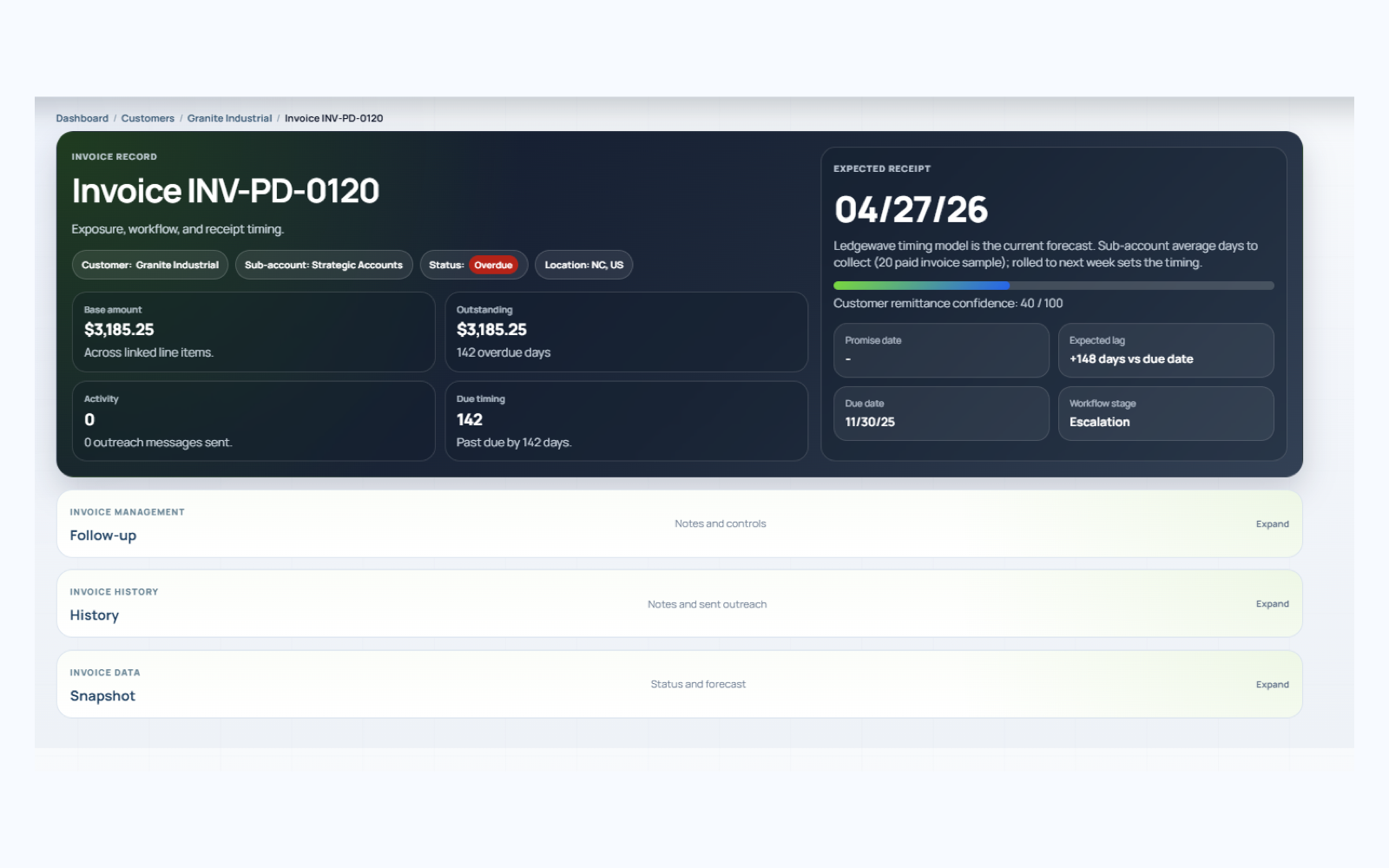
Receivables workflow software for the full weekly cycle.
Ledgewave connects prioritization, draft outreach, invoice detail, reporting, and cash forecasting so finance teams
can move from source data to action without rebuilding the workflow every cycle, starting with the receivables and planned billing data they already have.
Dashboard + drilldownsInvoice detailDraft follow-upForecast + reportsStart with available data
Rollout Foundation
Start with the data you already have, not a giant integration project.
The platform turns source data into a structured operating portfolio the rest of the workflow can trust, then expands data paths only when the rollout needs more depth.
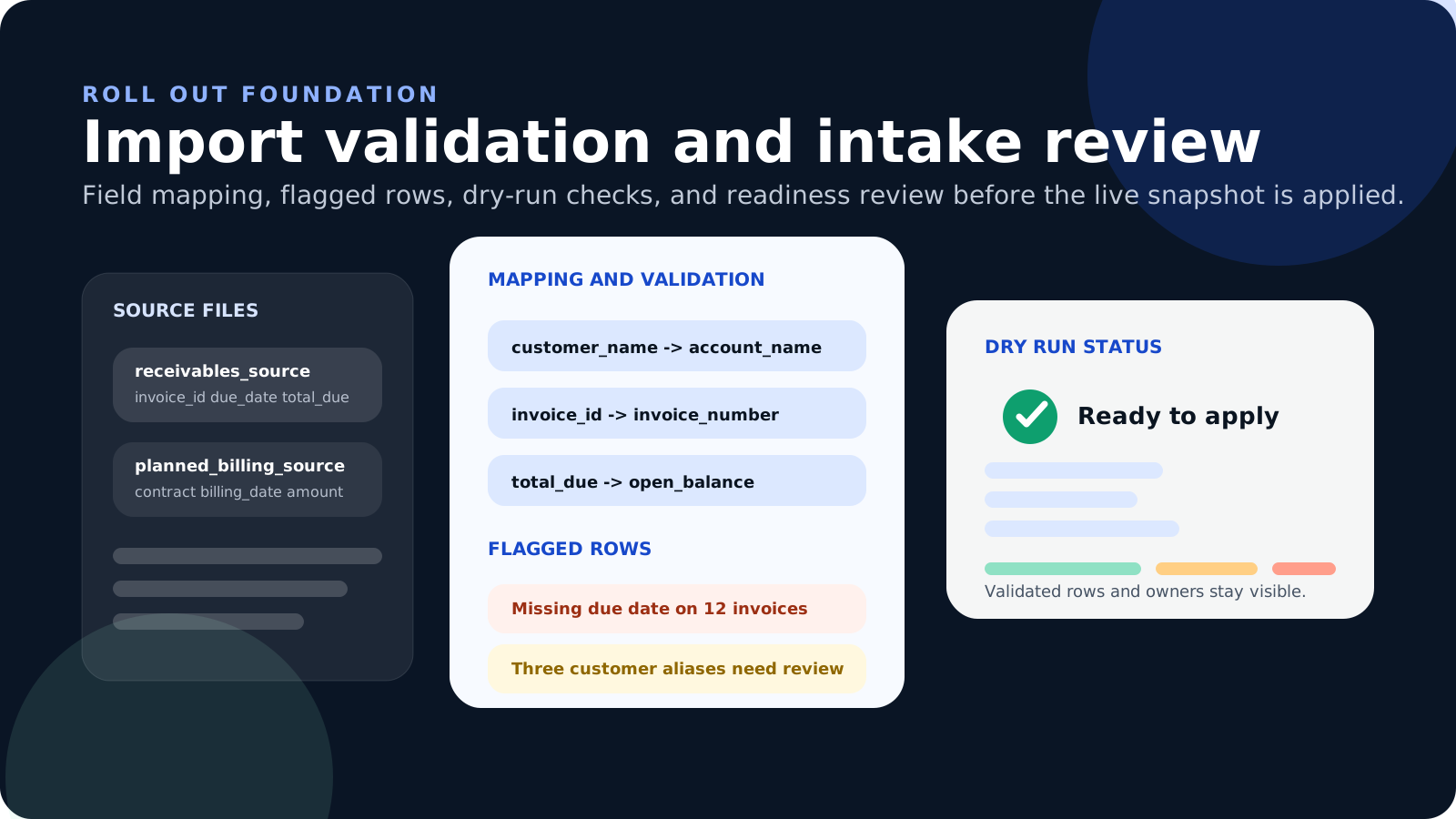
Receivables snapshot import
Load open receivables data with normalized headers, parsed dates, invoice upserts, and flagged mismatch review.
Maps customer and sub-account variants into a shared model
Finds existing invoices or creates new ones
Recalculates outstanding balance context before the workflow starts
Planned billing import
Bring in future billing so the forecast does not rely only on invoices that are already open.
Keys records by contract and line-level identifiers
Updates active planned rows and retires missing rows
Shapes future-facing visibility for forecast review and workload planning
Validation before apply
Use dry-run checks before the team commits a file so file-shape issues, duplicate keys, and flagged records appear before they affect operations.
Built for teams that need confidence before replacing the live snapshot
Improves trust in every downstream dashboard and workflow view
Creates a disciplined import-to-action process the whole team can trust
Portfolio Command
Move from high-level exposure to invoice-level investigation without context switching.
The dashboard layer is built to expose pressure quickly and let operators drill into the exact invoices and customers behind the number.
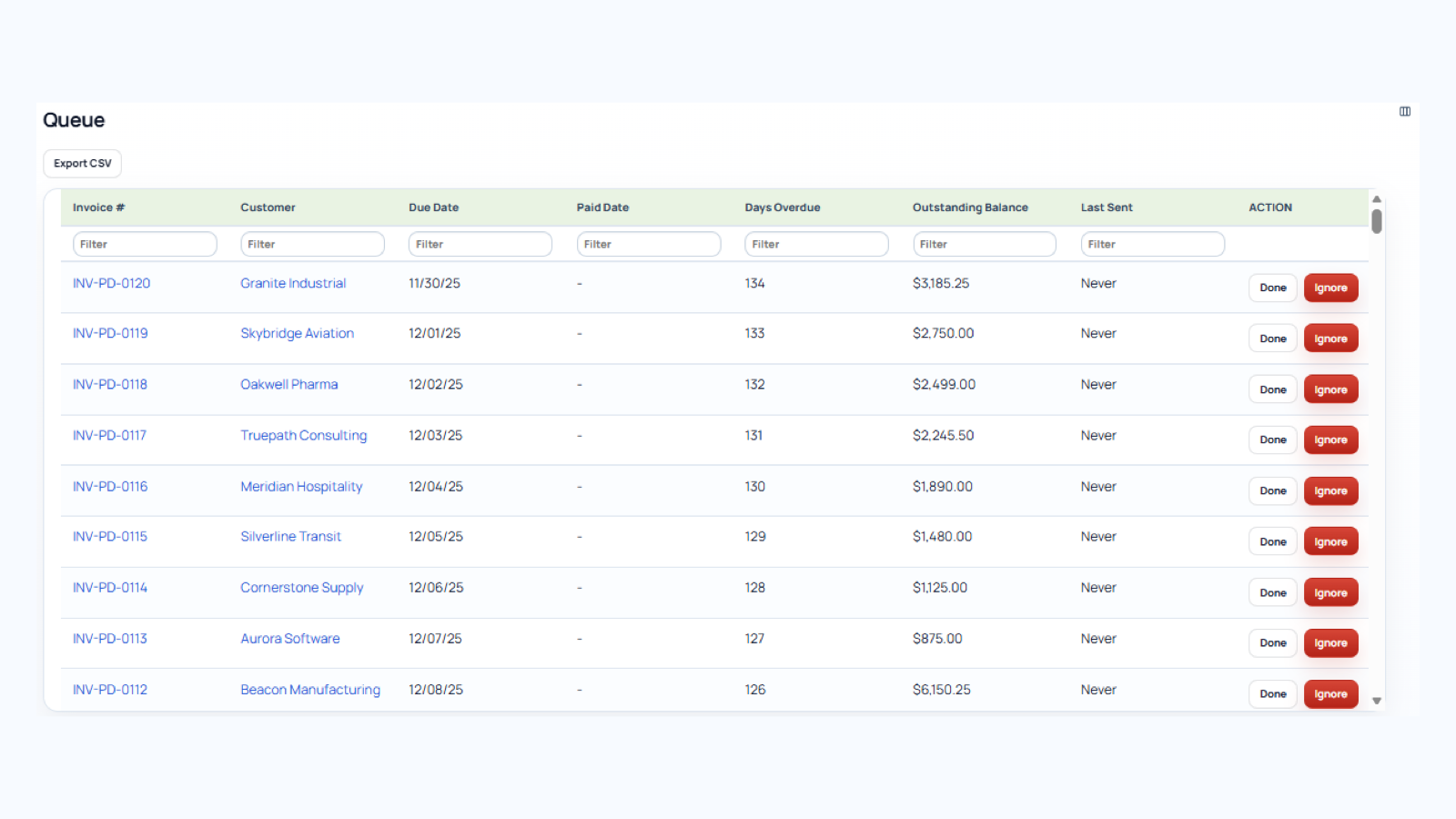
Overdue visibility
Track overdue totals, invoice counts, customer concentration, and aging distribution from a single overview.
Customer drill-downs
Move into partner and sub-account detail to understand where the balance sits, what changed, and what follow-up is appropriate.
Historical snapshots
Keep live state and snapshot history close enough to support both day-to-day action and leadership reporting.
Draft Outreach
Turn passive aging information into actionable follow-up.
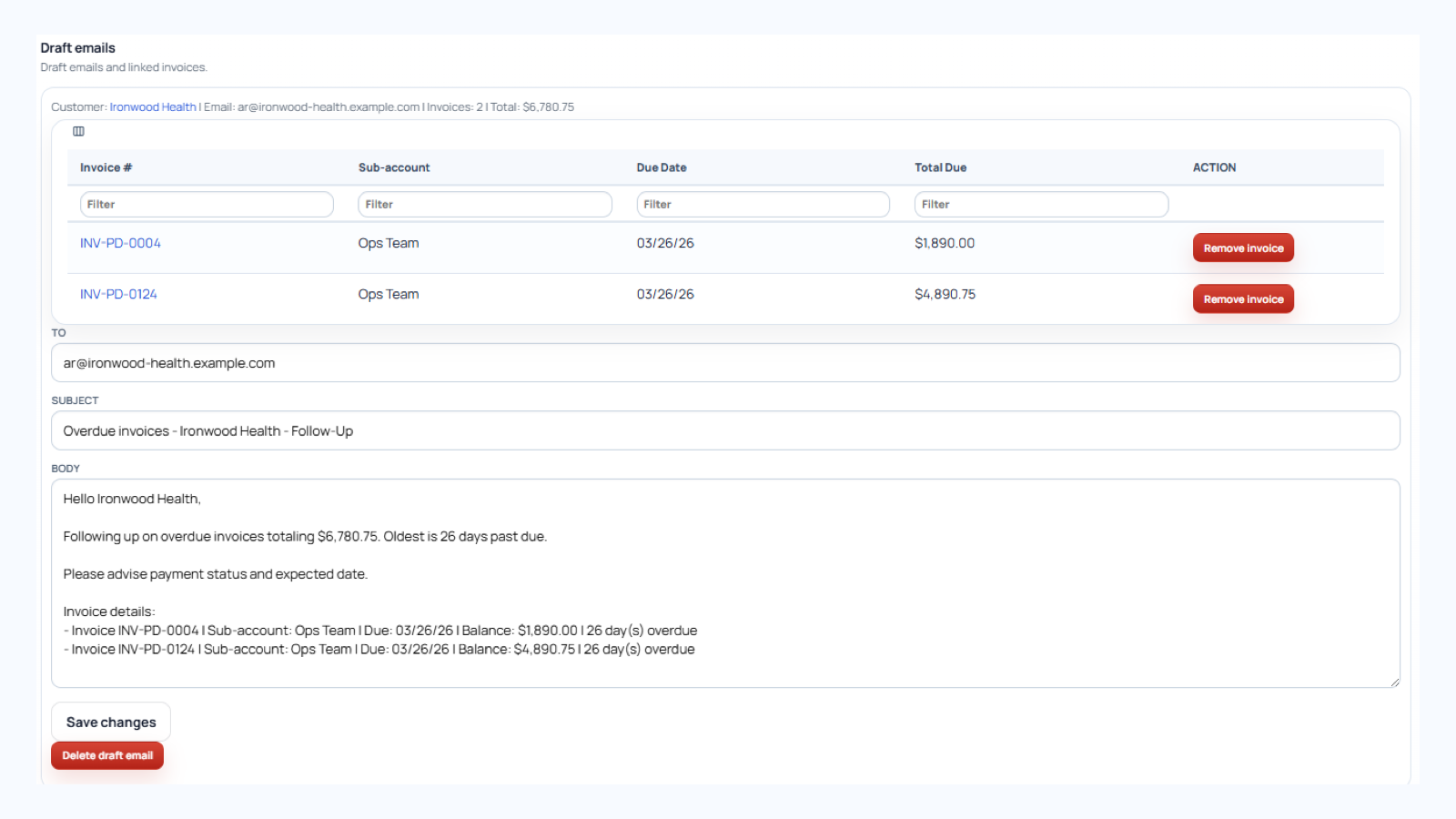
The correspondence layer groups open balances by partner, applies workflow stage logic, builds drafts from templates and invoice context, and keeps the resulting activity inspectable.
Draft batch workflow
Group invoices by partner and aging stage
Generate draft subject and body content with contextual invoice detail
Edit, export, or mark items as sent after review
Preserve invoice-to-draft links for traceability
Why operators like it
The team does not have to reconstruct the customer story before writing
Workflow stage and invoice context stay attached to the message
Drafts can be reviewed with better consistency across collectors
Communication activity stays closer to the receivables record
Reporting And Forecasting
Connect expected cash timing to the real receivables and billing records behind it.
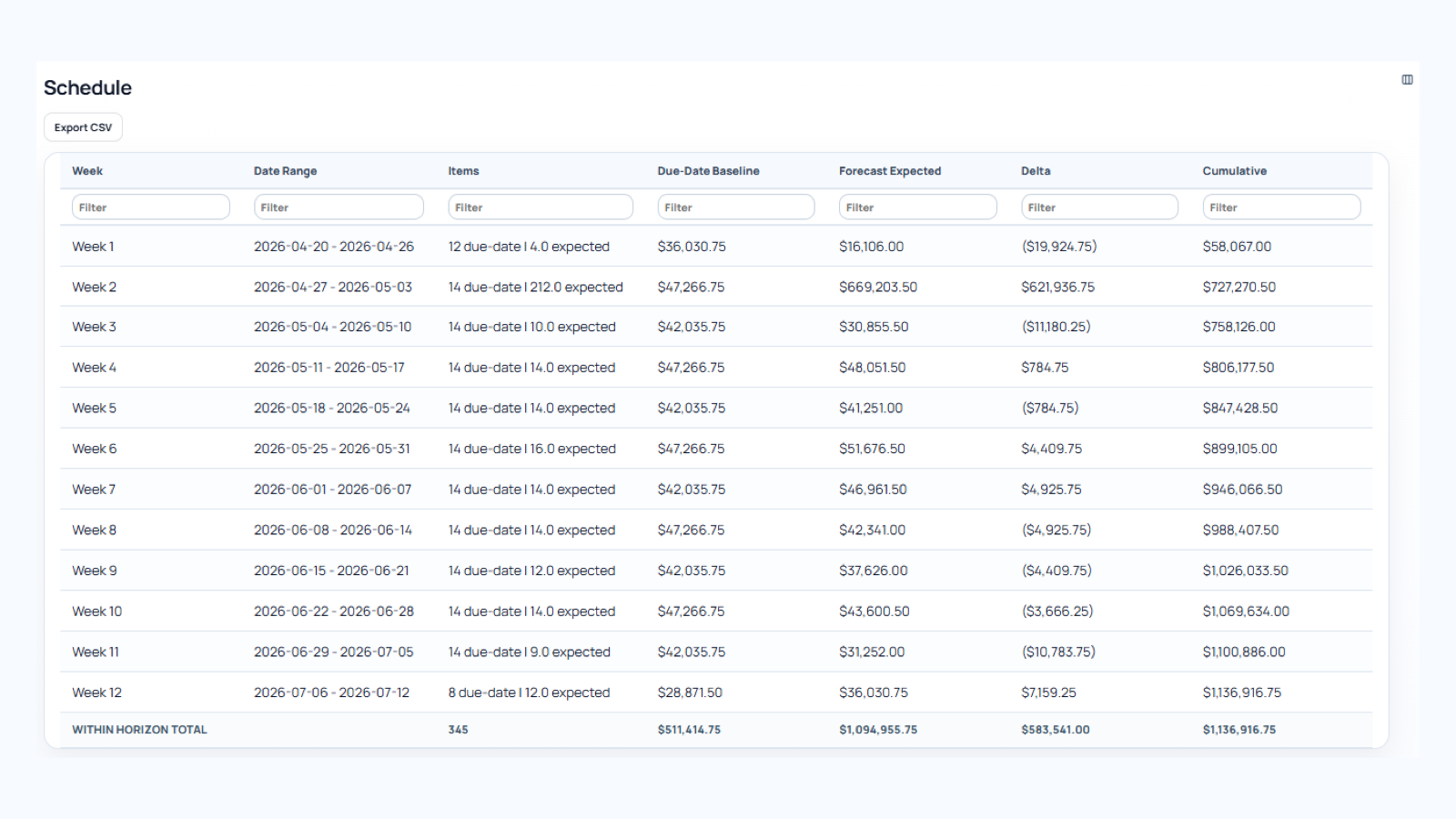
The platform builds multi-week views from open invoices and planned billing, then lets teams compare due-date assumptions with behavior-shaped expectations.
Forecast views
See due-date baseline, expected timing, within-horizon records, after-horizon records, and unscheduled items in one review flow.
Payment behavior analytics
Review lag distribution, on-time rate, DSO, and timing profiles to understand how payment behavior is shaping the forecast.
Operational reports
Use built-in reporting surfaces for A/R aging, payment behavior, daily snapshots, data quality, and board-ready review.
Team Consistency
Keep the working context, not just the output.
Ledgewave is valuable because it preserves the working context around receivables management, not just the headline metrics.
Shared follow-up history
Notes, draft activity, and invoice context stay visible so collectors do not have to reconstruct the story every time they re-enter an account.
Repeatable weekly motion
The same workflow can be used every cycle: import, prioritize, draft, review expected cash, and move into the next round of follow-up.
Shared data spine
Dashboard, reports, outreach, and detail pages read from the same structured portfolio instead of separate shadow systems.
Platform FAQ
Questions teams ask when they want product detail.
What does the Ledgewave platform include?
The platform covers receivables imports, planned billing, portfolio prioritization, invoice detail, draft follow-up, payment behavior reporting, and forecast review.
How does Ledgewave handle follow-up workflow?
Ledgewave groups invoices by partner and stage, prepares draft follow-up with invoice context, and keeps message history tied to the receivable so collectors do not rebuild the story every cycle.
How does the platform support cash forecasting?
It combines open receivables, planned billing, payment behavior, and workflow context so finance teams can explain expected cash timing with more than due dates alone.
Can teams start with files and expand later?
Yes. Many rollouts start with the source path that is ready at launch, such as ERP or accounting data, secure files, or scoped API connections, then deepen integrations only when the workflow requires it.
Request A Demo
See the modules in the same sequence your team would actually use them.
Use the dedicated demo page to share your workflow, systems, and priorities so the walkthrough can stay grounded in real operating detail.